Eturns Team · February 13, 2026 · Updated April 18, 2026 · 4 min read
What Is Exchange-First Returns? How It Works & Why It Matters
TL;DR
Exchange-first returns is a strategy where the default option presented to customers requesting a return is a product exchange rather than a refund. It retains 100% of order revenue and increases customer lifetime value by keeping the relationship active.
What Is Exchange-First Returns?
Exchange-first returns is a returns management strategy where the default resolution presented to customers is a product exchange rather than a monetary refund. When a customer initiates a return, the system prioritizes showing available exchange options — different sizes, colors, or alternative products — before presenting the refund path.
Key numbers: Exchange-first strategies retain 100% of order revenue vs 0% for refunds. Merchants using exchange-first flows see 25-35% higher revenue retention from returns. Customers who exchange are 2.5x more likely to make a future purchase than customers who receive refunds. Adding a 5-10% store credit bonus converts 70%+ of refund requests.
This approach differs fundamentally from the traditional refund-first model where the return form defaults to "How would you like your refund?" Exchange-first asks "What would you prefer instead?" For implementation details, see our exchange-first returns strategy guide. It is a deliberate shift in the return flow architecture that keeps revenue within the merchant's ecosystem while solving the customer's underlying problem.
How Exchange-First Differs From Traditional Returns
In a traditional return process, the customer selects "I want to return this item," chooses a reason from a dropdown, and the system processes a refund to their original payment method. The exchange option, if it exists at all, is buried as a secondary choice.
Exchange-first inverts this flow:
- Customer initiates return and selects a return reason
- System presents exchange options relevant to the stated reason (e.g., next size up for "too small," different color for "looked different in photos")
- Customer accepts an exchange or explicitly chooses to proceed to a refund instead
- Exchange processes immediately with the new item shipping before the return is received
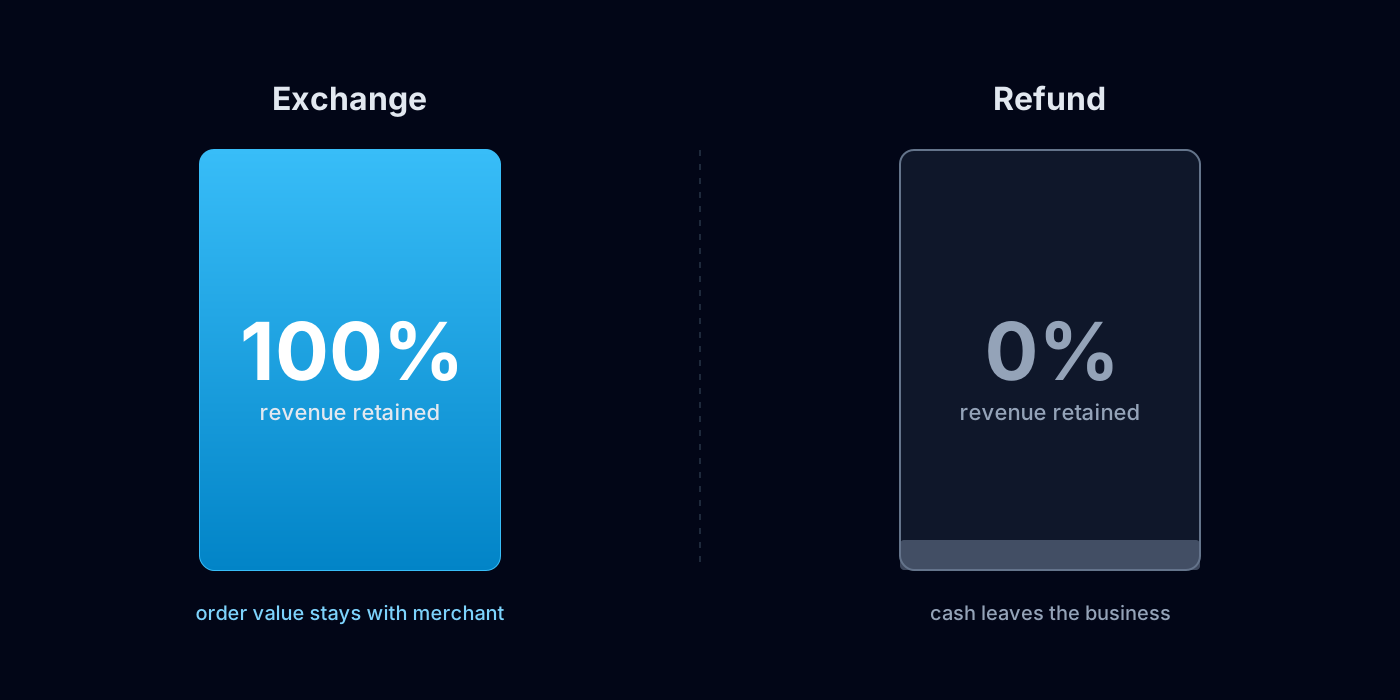
The financial difference is stark. A refund returns 100% of order value to the customer and out of your business. An exchange retains 100% of that value. For a store with $50,000 in monthly returns, shifting 30% of refunds to exchanges preserves $15,000 per month — $180,000 per year.
Benefits for Merchants
Exchange-first delivers three measurable benefits to merchants:
- Revenue preservation: Exchanges retain the full order value. Stores implementing exchange-first report retaining 25-40% more revenue from their returns flow compared to refund-first approaches.
- Reduced return costs: When a customer exchanges, you ship one item and receive one item back. The net inventory impact is neutral. With refunds, you lose the sale, pay for return shipping, and still must process and restock the item.
- Higher customer lifetime value: Customers who exchange are 2.5x more likely to purchase again within 60 days than customers who receive refunds. The exchange resolves their issue while keeping them engaged with your brand.
Benefits for Customers
Exchange-first is not just a merchant-side optimization. Customers benefit in concrete ways:
- Faster resolution: Exchanges can ship immediately, while refunds typically take 5-10 business days to process. The customer gets what they actually wanted sooner.
- Problem solved, not abandoned: When a shirt does not fit, the customer wanted a shirt that fits — not their money back. An exchange gives them the outcome they originally sought.
- Incentives: Many exchange-first programs offer free expedited shipping on exchanges or small bonus credits, making the exchange a better deal than the refund.
Customer satisfaction data supports this. Surveys indicate that 92% of customers who complete an exchange report being satisfied with the process, compared to 85% satisfaction for refund recipients. Exchanges feel like solutions; refunds feel like failures.
How to Implement Exchange-First
Implementing exchange-first requires three changes to your returns program:
1. Restructure the Return Flow
Configure your return interface or system so that exchange options appear before refund options. This is a UX change, not a policy change — customers can still access refunds, but exchanges are the presented default.
2. Connect Real-Time Inventory
Exchange suggestions must reflect actual inventory availability. Nothing damages trust faster than suggesting an exchange option that turns out to be out of stock. Integrate your return system with your inventory management so suggestions are always accurate.
3. Enable Instant Exchanges
Ship the exchange item as soon as the customer confirms their choice, without waiting to receive the returned item. This requires a return system that supports split fulfillment and a policy that trusts customers to return the original. The risk is low — fewer than 3% of instant exchanges result in non-return of the original item — and the conversion lift from instant fulfillment is significant.
Exchange-first is not about forcing customers away from refunds. It is about presenting the better option first and making it the easiest path. As a key pillar of e-commerce revenue retention, when done right, customers prefer it because it solves their problem faster, and merchants prefer it because it preserves revenue that would otherwise disappear.
Frequently Asked Questions
What is exchange-first returns?
Does exchange-first mean customers cannot get refunds?
What kind of stores benefit most from exchange-first?
Automate your Shopify returns with AI
Eturns is the AI-powered Shopify returns app that handles returns, exchanges, and refunds automatically. Reduce refund rates by 40-70% and resolve requests in minutes.
Related Articles
Exchange-First Returns: How to Keep Revenue in Your Ecosystem
Exchanges retain 100% of order revenue compared to 0% for refunds. Here's how to make exchanges the default outcome.
Returns ManagementBuilding a Zero-Friction Exchange Experience on Shopify
Exchanges preserve revenue and keep customers happy. Here's how to make the exchange process seamless.
Revenue RetentionE-commerce Revenue Retention: Turn Returns Into Revenue
$890 billion in merchandise is returned annually, but 30-70% of that revenue is recoverable. Here's how to build a revenue retention strategy.