Eturns Team · February 28, 2026 · Updated April 18, 2026 · 5 min read
E-commerce Return Rate Benchmarks 2026: What's Normal for Your Industry?
TL;DR
The average e-commerce return rate is 16.9% overall. By industry: apparel 24-40%, footwear 30-35%, electronics 15-20%, home goods 10-15%, beauty 5-10%. Processing each return costs $10-$20 on average.
What Is the Average E-commerce Return Rate in 2026?
The average e-commerce return rate in 2026 is 16.9%, meaning roughly one in every six online purchases is returned. This represents a slight increase from 14.5% in 2023, driven by continued growth in online apparel sales and the expansion of "try before you buy" shopping behaviors. For Shopify merchants specifically, the average return rate closely mirrors the broader e-commerce average, though it varies dramatically by product category, price point, and whether the store operates online-only or across multiple channels.
Understanding where your return rate falls relative to industry benchmarks is essential for diagnosing whether you have a returns problem, a product problem, or simply operate in a high-return category where your rate is normal. For a complete overview, see our Shopify returns management guide.
Return Rates by Industry
Return rates vary enormously by product category. What constitutes a concerning return rate in one industry is perfectly healthy in another. Here are the 2026 benchmarks for major e-commerce categories:
Apparel and Clothing: 24-40%
Apparel consistently has the highest return rate of any e-commerce category. The primary driver is fit — customers cannot try on clothing before purchasing online, and sizing varies across brands. Within apparel, the range is wide: basics and loungewear sit at the lower end (20-25%), while formal wear and premium fashion push toward 35-40%. Stores with AI-powered size recommendation tools average 5-8 percentage points lower than those without.
Footwear: 30-35%
Footwear return rates rival apparel, again driven primarily by sizing issues. Shoes have less tolerance for imperfect fit than clothing, and width variations compound the problem. Athletic and running shoes see slightly lower return rates (25-30%) because customers tend to know their size in performance footwear. Fashion footwear, boots, and heels sit at the upper end of the range.
Electronics and Tech Accessories: 15-20%
Electronics returns are driven by compatibility issues, buyer's remorse on high-ticket items, and the "research return" behavior where customers buy multiple options and return the ones they do not keep. Products with clear, detailed specifications and compatibility information tend to cluster at the lower end of this range. Tech accessories (cases, cables, adapters) have lower return rates (8-12%) than primary devices.
Home Goods and Furniture: 10-15%
Home goods see moderate return rates, with the range driven largely by product size and shipping complexity. Small home goods (kitchenware, decor items) sit around 8-12%, while furniture pushes to 15-20% due to color/size discrepancies between online images and reality. Accurate room-scale photography and AR visualization tools are reducing returns in this category.
Health and Beauty: 5-10%
Beauty products have the lowest return rates in e-commerce, driven by hygiene concerns (many stores do not accept returns on opened products) and relatively low price points that reduce the motivation to return. Skincare and cosmetics sit at 5-8%, while wellness products and supplements push toward 8-10%. Subscription beauty boxes have even lower return rates at 3-5%.
Seasonal Patterns in Return Rates
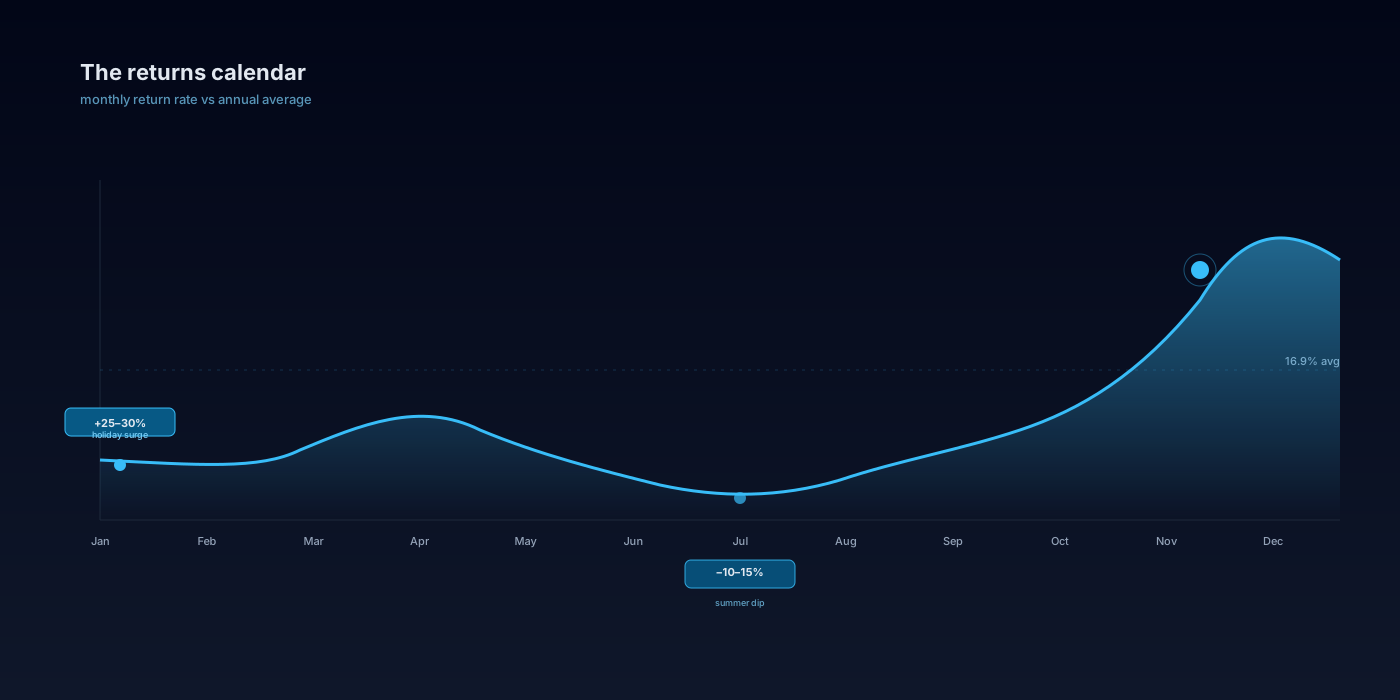
Return rates are not constant throughout the year. Seasonal patterns create predictable spikes that Shopify merchants must plan for.
The Holiday Return Surge
November and December purchases generate the highest return volumes, but the returns themselves land in January. Post-holiday return rates spike 25-30% above annual averages, peaking in the first two weeks of January. This is driven by gift-giving (the recipient did not choose the item), impulse purchases during Black Friday and Cyber Monday sales, and the general increase in transaction volume. Merchants should staff support teams and stock return processing capacity for a January surge that is roughly 1.5x their normal monthly return volume.
Summer Dip
June through August typically see the lowest return rates of the year, approximately 10-15% below annual averages. This correlates with fewer impulse-driven sales events and a seasonal shift toward experiential spending.
Back-to-School Bump
August and September see a moderate return rate increase in categories like apparel, electronics, and school supplies, as parents and students purchase items that may not meet expectations once the school year starts.
Online vs In-Store Return Rates
The channel through which a customer makes a purchase dramatically affects the likelihood of a return. Online purchases are returned at rates 2-3x higher than in-store purchases. The 2026 benchmarks are:
- Online-only purchases: 20-30% return rate
- In-store purchases: 8-10% return rate
- Buy Online, Return In-Store (BORIS): Stores offering BORIS see 15-20% lower total return processing costs because they eliminate return shipping and can inspect and restock items immediately
For Shopify merchants who also operate physical retail through Shopify POS, enabling in-store returns for online orders is one of the most effective return cost reduction strategies available. Customers returning in-store are also 60-70% more likely to make an additional purchase during the return visit, partially offsetting the return's revenue impact.
The Cost of Returns by the Numbers
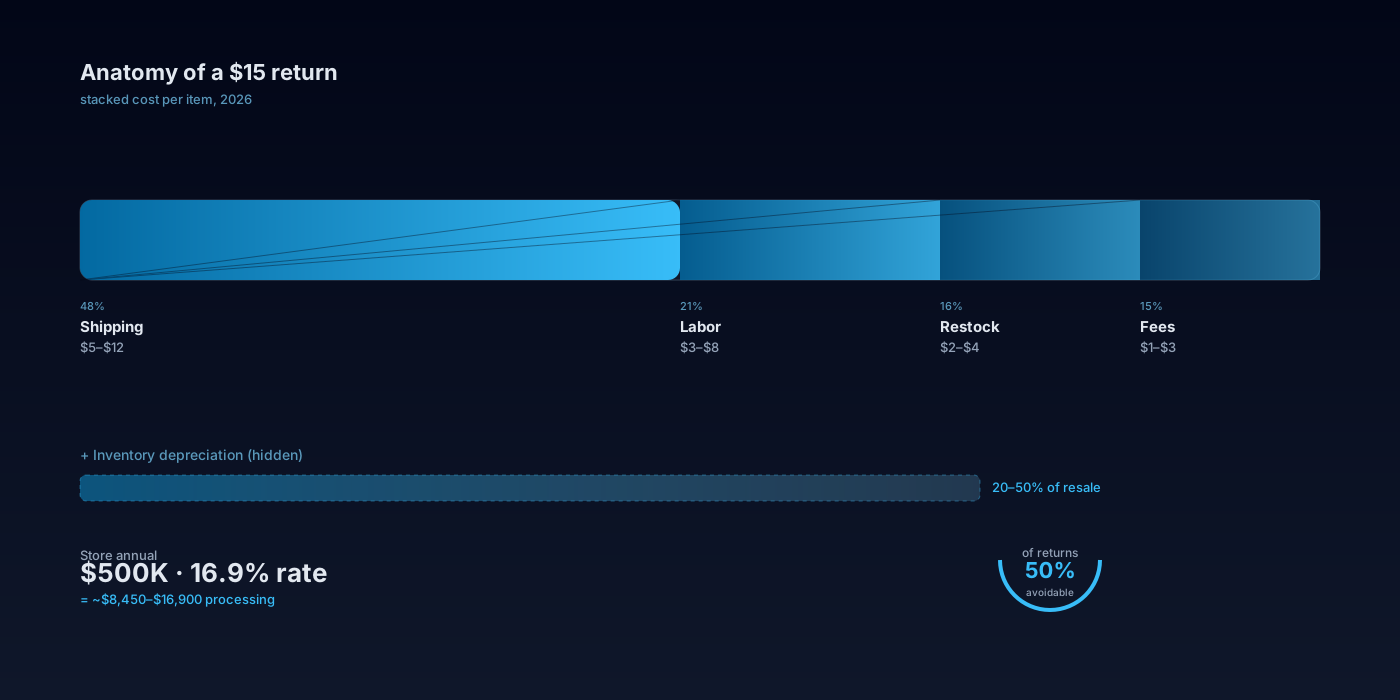
Understanding return rates is only half the picture. The cost per return determines the actual financial impact on your Shopify store.
- Average cost to process a return: $10-$20 per item (shipping, inspection, restocking, customer service)
- Return shipping cost: $5-$12 per package (domestic U.S., varies by size and weight)
- Inventory depreciation: Returned items lose 20-50% of their resale value on average, with seasonal and fashion items depreciating fastest
- Customer service cost per return: $3-$8 per return when handled manually (2.4 average interactions per return at $1.50-$3.50 per interaction)
- Total annual return processing costs for U.S. e-commerce: Estimated at $101 billion in 2025
For a Shopify store generating $500,000 in annual revenue with a 16.9% return rate, that translates to approximately $84,500 in returned merchandise and $8,450-$16,900 in processing costs — before accounting for inventory depreciation.
How to Use These Benchmarks
Benchmarks are diagnostic tools, not targets. If your return rate is significantly above your category average, investigate the root causes using our proven strategies to reduce your Shopify return rate: product description accuracy, sizing information quality, shipping and packaging standards, and customer expectation alignment. If your return rate is at or below the benchmark, focus on optimizing the returns you do receive — maximizing exchange rates, minimizing processing costs, and extracting actionable product insights from return reason data.
Track your return rate monthly, segmented by product category, acquisition channel, and customer type (first-time versus repeat). A store-wide return rate can mask category-specific problems. Your overall rate might be a healthy 15%, but if your best-selling category runs at 35%, that single category may be eroding your margins disproportionately.
Frequently Asked Questions
What is the average return rate for online clothing stores in 2026?
Why are online return rates higher than in-store return rates?
How much does the average return cost a Shopify merchant to process?
When do most e-commerce returns happen during the year?
Is a 20% return rate bad for my Shopify store?
Automate your Shopify returns with AI
Eturns is the AI-powered Shopify returns app that handles returns, exchanges, and refunds automatically. Reduce refund rates by 40-70% and resolve requests in minutes.
Related Articles
7 Proven Ways to Reduce Your Shopify Return Rate
The average e-commerce return rate is 20-30%. These 7 data-backed strategies help Shopify merchants cut returns significantly.
Returns ManagementThe Complete Guide to Shopify Returns Management in 2026
Everything Shopify merchants need to know about returns management — from policy setup to AI automation. Covers costs, tools, best practices, and how to turn returns into retained revenue.
Revenue RetentionE-commerce Revenue Retention: Turn Returns Into Revenue
$890 billion in merchandise is returned annually, but 30-70% of that revenue is recoverable. Here's how to build a revenue retention strategy.