Eturns Team · March 3, 2026 · Updated April 18, 2026 · 6 min read
7 Proven Ways to Reduce Your Shopify Return Rate
TL;DR
Reduce your Shopify return rate by improving product descriptions and photos, adding size guides, using AI pre-purchase chatbots, implementing quality control, setting accurate shipping expectations, offering exchanges first, and sending post-purchase follow-ups.
Key Takeaways
- 7 proven strategies: better product descriptions, size guides, quality control, exchange-first policies, AI automation, customer feedback loops, and visual content
- Generous return policies (60-90 days) actually reduce return rates vs. strict policies
- Most strategies show measurable results within 30-60 days
- Free returns for exchanges only is the optimal middle-ground approach
How to Reduce Your Shopify Return Rate
The average e-commerce return rate sits at 16.9%, but that number is not a fixed reality — it is a starting point for improvement. As part of a comprehensive Shopify returns management approach, the top-performing stores maintain return rates 30-50% below their category average by systematically addressing the root causes of returns rather than simply tightening their return policies. A restrictive return policy does not reduce returns; it reduces sales. These seven strategies reduce returns while improving the customer experience.
1. Improve Product Descriptions and Photography
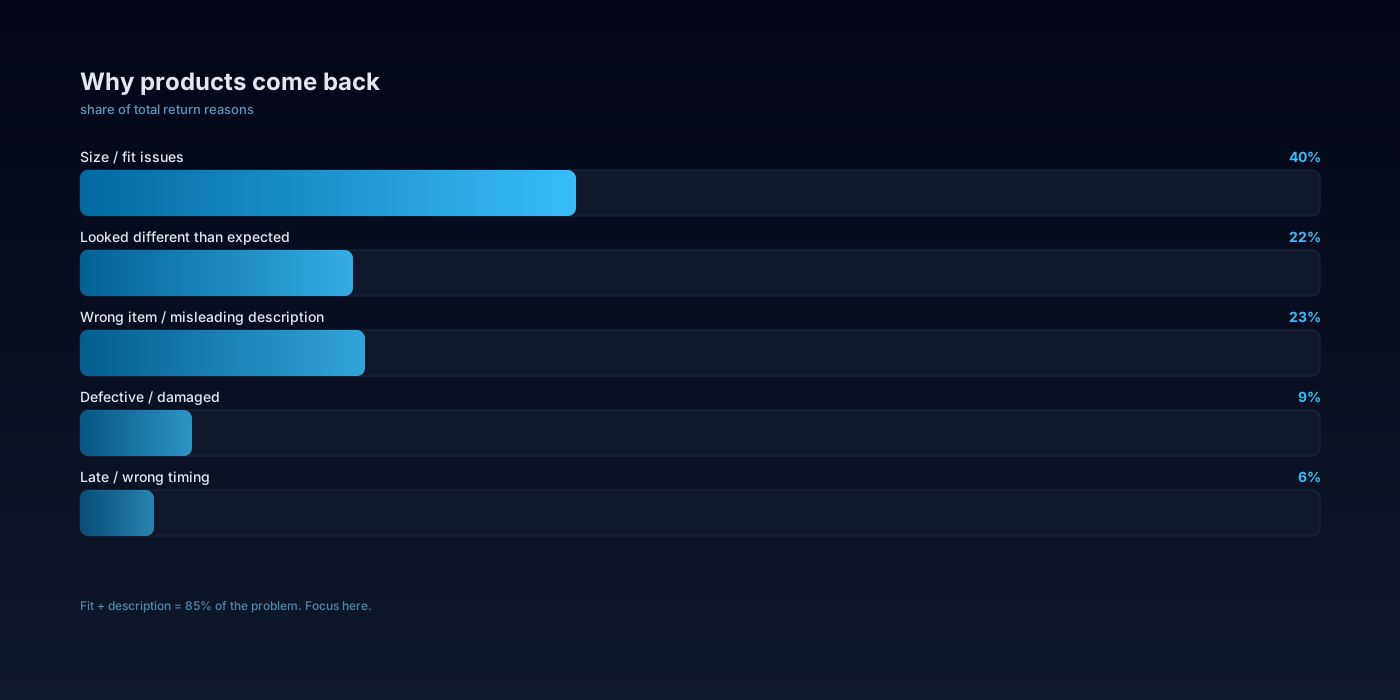
Inaccurate or incomplete product information is the single largest driver of e-commerce returns. 22% of all online returns happen because the product looked different than expected, and another 23% occur because the customer received the wrong item or the description was misleading. Detailed, accurate product descriptions that include exact measurements, materials, weight, and real-world context reduce these returns significantly.
For photography, invest in consistent lighting, multiple angles (front, back, side, detail shots), and lifestyle images that show scale. Video content demonstrating the product in use reduces returns by an additional 15-20% compared to static images alone. User-generated photos and reviews that show the product in real customer environments add a layer of trust that professional photography cannot replicate.
Quick Wins for Product Content
- Add exact dimensions in both inches and centimeters
- Include material composition percentages (e.g., "78% cotton, 22% polyester" not just "cotton blend")
- Show the product on multiple body types or in multiple settings
- Add a "What is in the box" section listing every included item
- Use comparison images for color accuracy ("Color shown may vary by screen; closest Pantone match is...")
2. Implement Detailed Size Guides
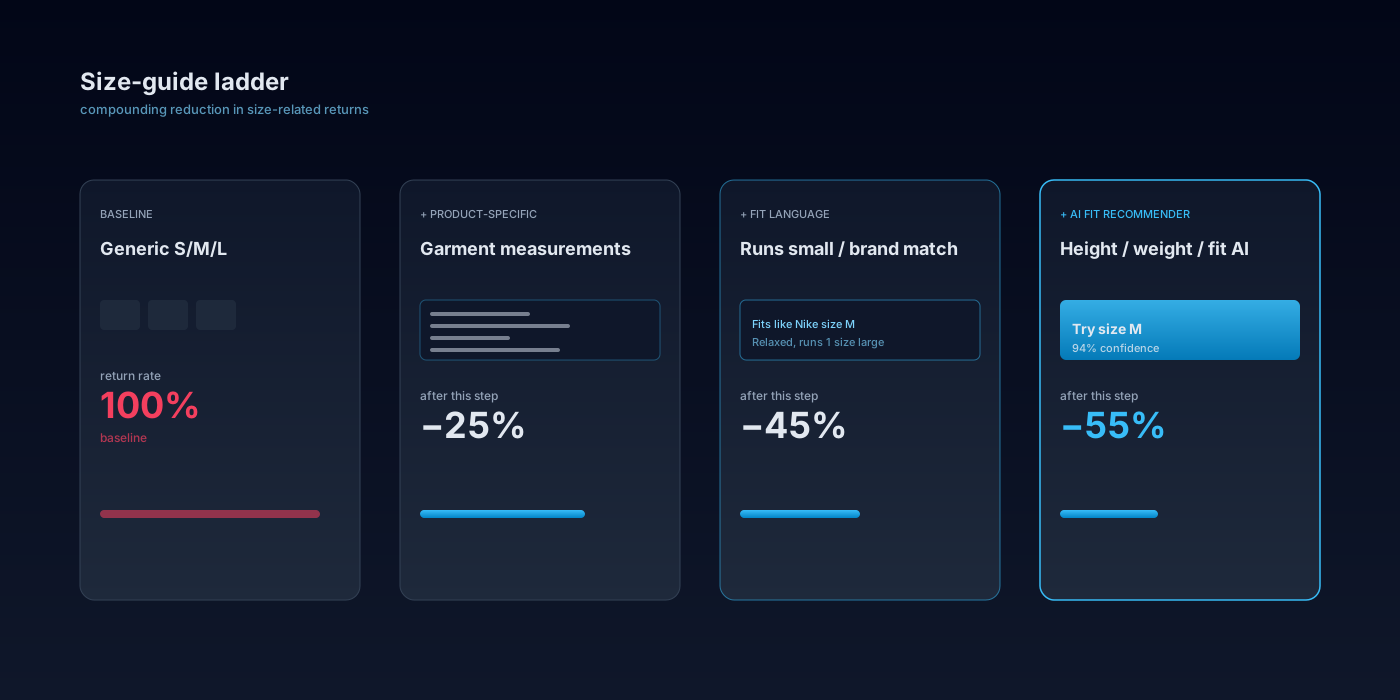
Size-related returns account for 30-50% of all apparel and footwear returns, making sizing the single highest-leverage return reduction opportunity for fashion merchants. Generic size charts (S/M/L with chest measurements) are insufficient. Effective size guides include garment-specific measurements (not just body measurements), fit descriptions ("relaxed fit, runs one size large"), comparison to well-known brands ("fits similar to Nike size M"), and interactive size recommendation tools.
Shopify stores that implement detailed, product-specific size guides report 20-30% reductions in size-related returns. AI-powered fit recommendation tools that ask customers about their height, weight, and preferred fit style push that improvement to 40-50%.
3. Deploy AI Chatbots for Pre-Purchase Questions
Many returns originate from unanswered questions at the point of purchase. A customer unsure about sizing, compatibility, or material makes a best guess, buys the product, and returns it when the guess was wrong. AI chatbots that answer product questions instantly — at 11 PM on a Saturday, when no support agent is available — prevent these returns before they happen.
Effective pre-purchase chatbots handle questions like "Will this fit my 6-year-old?" or "Is this compatible with my iPhone 15?" by referencing product data, size guides, and compatibility charts. Stores using AI chatbots for pre-purchase support report 12-18% reductions in return rates, with the highest impact in categories with complex product specifications like electronics and apparel.
The key is training the chatbot on your actual product data, not generic responses. A chatbot that can say "This jacket runs 2 inches smaller in the chest than our Classic Fit line — if you are between sizes, we recommend sizing up" prevents returns that a generic "Please refer to our size chart" response would not.
4. Strengthen Quality Control Processes
8-10% of e-commerce returns are due to defective or damaged products. This is the most directly controllable return category, yet many Shopify merchants — especially those using print-on-demand or third-party fulfillment — lack systematic quality control processes.
Implement pre-shipment inspection checklists: correct item, correct size/color, no visible defects, proper packaging. For high-value items, add photo documentation before shipping. Track defect rates by supplier, product, and fulfillment center to identify systemic issues. A 50% reduction in defect-related returns is achievable within 60 days of implementing structured quality control.
If you use third-party logistics (3PL), request regular quality audit reports and negotiate quality guarantees in your fulfillment contract. The cheapest fulfillment provider is rarely the cheapest option when you factor in return processing costs from higher error rates.
5. Set Accurate Shipping and Delivery Expectations
Late deliveries and shipping confusion contribute to 5-8% of returns, particularly when customers order time-sensitive items (gifts, event outfits) that arrive too late. Customers who do not know when their order will arrive are more likely to order from a competitor as a backup and return whichever arrives second.
Display estimated delivery dates on product pages and at checkout, not just "ships in 3-5 business days." Account for processing time, carrier transit time, and your actual fulfillment track record. If your average fulfillment time is 2 days, do not promise 1 day. Under-promise and over-deliver.
Send proactive shipping updates at every stage: order confirmed, picked and packed, shipped with tracking number, out for delivery, delivered. Stores that send proactive delivery updates see 30% fewer "where is my order" support tickets and measurably lower return rates on time-sensitive purchases.
6. Adopt an Exchange-First Approach
The default resolution for most Shopify stores is a refund. This is leaving money on the table. Customers who exchange keep their relationship with your store intact. Customers who get refunded are gone.
An exchange-first approach means making exchanges easier, faster, and more attractive than refunds:
- Free shipping on exchanges (even if you charge for return shipping on refunds)
- Instant exchange processing — ship the replacement before receiving the return
- Store credit bonuses — offer 110% of the purchase price as store credit versus 100% as a refund
- One-click exchanges in your returns portal for common swaps (size/color changes)
Stores that implement exchange-first returns strategies retain 25-35% of revenue that would otherwise be refunded. For a store processing $50,000 in monthly returns, that is $12,500-$17,500 in retained revenue every month.
7. Send Post-Purchase Follow-Up Emails
The 48 hours after delivery are the critical window for return decisions. A well-timed post-purchase email sequence can address buyer's remorse, answer usage questions, and resolve minor issues before they escalate to return requests.
An effective post-purchase sequence includes:
- Delivery confirmation (day of delivery): "Your order has arrived! Here is how to get the most out of your [product]."
- Usage tips (day 2-3): Product-specific care instructions, styling suggestions, or setup guides.
- Check-in (day 5-7): "How is everything? If something is not right, we are here to help." Include a direct link to support and your returns portal.
This sequence accomplishes two things. First, it resolves minor issues (missing instructions, unclear setup) that might otherwise become returns. Second, it deepens the customer's engagement with the product, increasing the psychological cost of returning it.
Stores that implement post-purchase email sequences report 8-12% reductions in return rates and higher customer satisfaction scores. The emails also drive repeat purchases — customers who feel supported after their first purchase are 2.5x more likely to buy again within 90 days.
Combining Strategies for Maximum Impact
No single strategy will cut your return rate in half. The merchants who achieve the lowest return rates in their category combine all seven strategies into a systematic approach. Better product content prevents uninformed purchases. Size guides eliminate fit guesswork. AI chatbots catch the questions that slip through. Quality control stops defective shipments. Accurate shipping sets the right expectations. Exchange-first policies retain revenue. And post-purchase follow-ups catch problems before they become returns.
Start with the strategy that addresses your highest-volume return reason. If 40% of your returns cite "did not fit," begin with size guides and AI sizing recommendations. If "looked different than expected" dominates, invest in product photography first. Use your returns data to prioritize and measure the impact of each change.
Frequently Asked Questions
What is a good return rate for a Shopify store?
Will a stricter return policy reduce my return rate?
How quickly should I expect to see results from these strategies?
Should I offer free returns to reduce my return rate?
Automate your Shopify returns with AI
Eturns is the AI-powered Shopify returns app that handles returns, exchanges, and refunds automatically. Reduce refund rates by 40-70% and resolve requests in minutes.
Related Articles
The Complete Guide to Shopify Returns Management in 2026
Everything Shopify merchants need to know about returns management — from policy setup to AI automation. Covers costs, tools, best practices, and how to turn returns into retained revenue.
Returns ManagementE-commerce Return Rate Benchmarks 2026: What's Normal for Your Industry?
The overall e-commerce return rate is 16.9%, but it varies wildly by industry. See where your store stands with these 2026 benchmarks.
Returns ManagementHow to Write a Shopify Return Policy That Reduces Refunds (Template Included)
67% of shoppers read your return policy before buying. Here's how to write one that builds trust, reduces refund rates, and encourages exchanges over refunds.