Eturns Team · March 4, 2026 · Updated April 18, 2026 · 6 min read
How to Write a Shopify Return Policy That Reduces Refunds (Template Included)
TL;DR
A well-written Shopify return policy should include a clear return window (30 days standard), condition requirements, exchange-first language, and specific exceptions for sale items — because 67% of customers read it before buying.
Why Your Return Policy Directly Impacts Sales
Your return policy is not a legal afterthought buried in your site footer — it is one of the most influential pages on your entire Shopify store and a critical component of your overall returns management strategy. 67% of online shoppers read a store's return policy before making a purchase, and 58% say they want a hassle-free, no-questions-asked return process. A confusing, restrictive, or hard-to-find return policy does not reduce returns. It reduces sales.
The data is clear: stores with transparent, easy-to-understand return policies see 15-20% higher conversion rates compared to stores with vague or restrictive policies. Customers are not looking for a loophole — they are looking for confidence. They want to know that if the product does not meet their expectations, they will not be stuck with it.
Your return policy also shapes whether a customer requests a refund or an exchange. Policy wording that emphasizes exchange options and store credit can shift the ratio significantly — some merchants report converting 30-40% of potential refunds into exchanges simply by adjusting how their policy presents resolution options.
Key Elements Every Shopify Return Policy Must Include
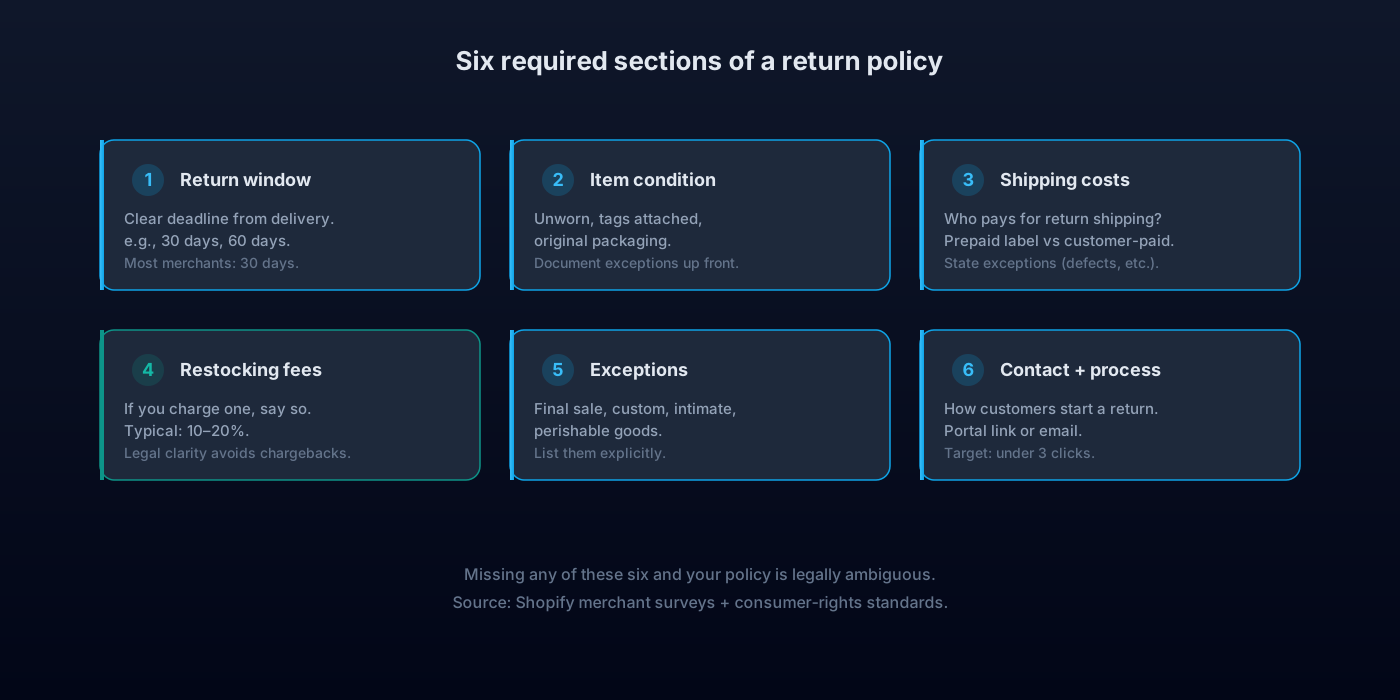
An effective return policy answers every question a customer might have before they need to ask it. Missing any of these elements creates ambiguity, which generates support tickets and erodes trust.
Return Window
State the exact number of days customers have to initiate a return, and specify whether the clock starts from the order date, ship date, or delivery date. Delivery date is the fairest and most customer-friendly starting point. The most common window is 30 days, though 60-day and 90-day windows have been shown to actually reduce return rates due to the psychological endowment effect.
Eligible Conditions
Describe what condition items must be in to qualify for a return. Be specific: unworn, unwashed, tags attached, original packaging. Vague language like "in resalable condition" invites disputes. If you accept items with tags removed but not items that have been worn, say that explicitly.
Exceptions and Non-Returnable Items
List every product category or type that is excluded from your standard return policy. Common exceptions include final sale or clearance items, intimate apparel, swimwear, personalized or custom products, perishable goods, and gift cards. Customers are far more accepting of exceptions when they are clearly stated upfront rather than discovered after they have already decided to return.
Resolution Options
Explain exactly what happens when a return is approved. Will the customer receive a refund to their original payment method? Can they choose an exchange? Is store credit an option? If you offer a store credit bonus (e.g., 110% of the purchase price), mention it prominently — this is one of the most effective tools for retaining revenue from returns.
Process and Timeline
Walk customers through exactly how to start a return, step by step. If you have a self-service portal, link directly to it. State how long each stage takes: return approval (e.g., within 24 hours), refund processing (e.g., 5-7 business days after item received), and exchange shipping (e.g., ships within 2 business days of approval).
Shipping Costs
Be explicit about who pays for return shipping. Free return shipping increases return rates by 10-15%, but it also increases purchase conversion rates by 20-30%. If you do not offer free returns, state the cost or method clearly. Pre-paid return labels with the cost deducted from the refund is a common middle ground.
Return Policy Template for Shopify Stores
Below is a proven template structure you can adapt for your store. Customize the specifics — window length, conditions, exceptions — to match your business.
Section 1: Overview Open with a customer-friendly statement: "We want you to love what you ordered. If something is not right, here is how we make it easy to return or exchange."
Section 2: Return Window "You have [30/60/90] days from the date your order was delivered to initiate a return. Items returned after this window are not eligible for a refund or exchange."
Section 3: Condition Requirements "To be eligible for a return, items must be: unworn and unwashed, with all original tags attached, in original packaging (if applicable). Items that show signs of wear, washing, or damage not present at delivery cannot be accepted."
Section 4: Non-Returnable Items "The following items are final sale and cannot be returned or exchanged: [list your exceptions — e.g., clearance items, intimate apparel, swimwear, personalized products, gift cards]."
Section 5: Resolution Options "When your return is approved, you can choose from: a full refund to your original payment method (processed within 5-7 business days), an exchange for a different size, color, or product (ships within 2 business days), or store credit equal to [100%/110%] of your purchase price."
Section 6: How to Start a Return "To start a return, visit our returns portal at [link]. Enter your order number and email address, select the item(s) you want to return, and follow the prompts. You will receive a prepaid shipping label via email."
Section 7: Return Shipping "Return shipping is [free / $X flat rate / deducted from your refund]. For exchanges, we cover the shipping cost of your replacement item."
How Policy Wording Affects Refund vs Exchange Rates
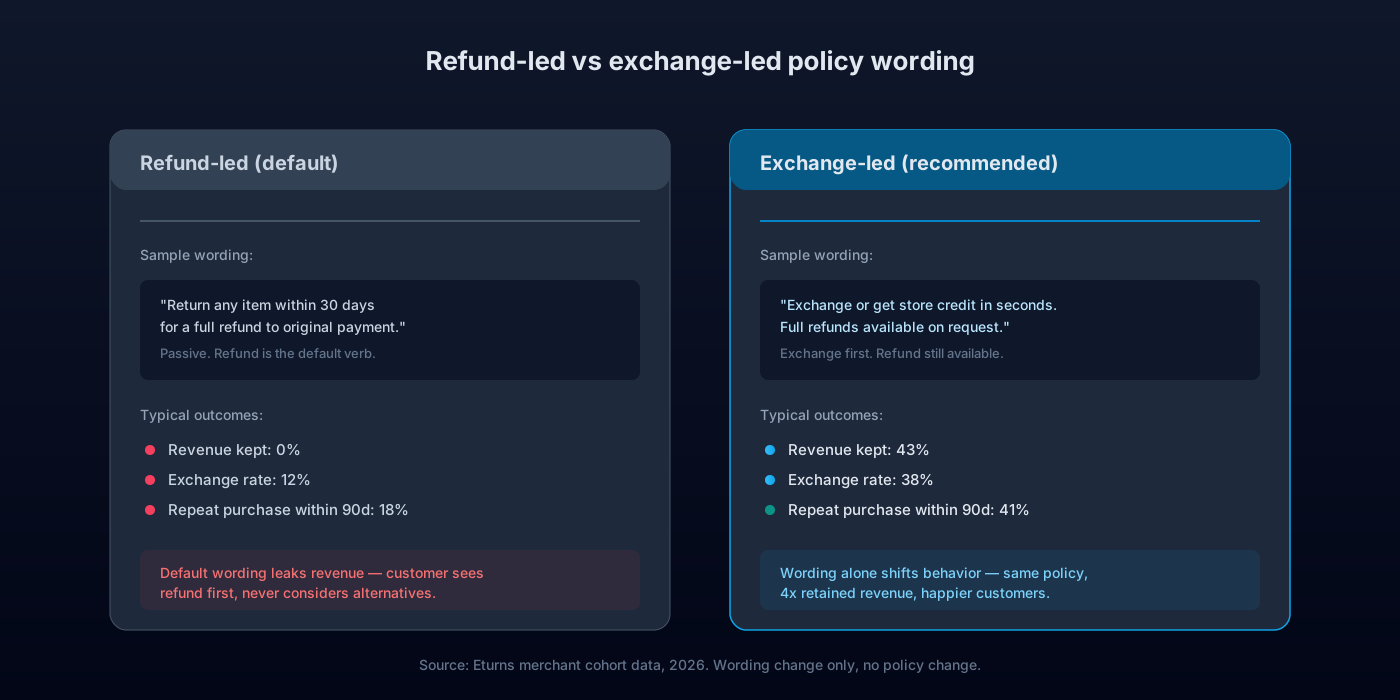
The way you frame resolution options in your return policy has a measurable impact on customer behavior. Stores that list "exchange" and "store credit" before "refund" in their policy see 12-18% higher exchange rates compared to stores that lead with refund language.
This is not manipulation — it is thoughtful presentation. Most customers initiating a return still want the product; they just want a different version of it. When your policy makes exchanges feel like the default, easy path and presents refunds as an available but secondary option, customers follow the path of least resistance.
Specific wording changes that improve exchange rates:
- "Get the right one" instead of "Get your money back" as the primary call to action
- Highlighting free shipping on exchanges prominently in the policy
- Offering a store credit bonus (even 5-10% extra) as an incentive
- Using positive language ("Find something you will love") rather than loss language ("Return for a refund")
Frequently Asked Questions
How long should my Shopify return window be?
Should I offer free return shipping?
Where should I display my return policy on my Shopify store?
Can I have different return policies for different product categories?
Automate your Shopify returns with AI
Eturns is the AI-powered Shopify returns app that handles returns, exchanges, and refunds automatically. Reduce refund rates by 40-70% and resolve requests in minutes.
Related Articles
The Complete Guide to Shopify Returns Management in 2026
Everything Shopify merchants need to know about returns management — from policy setup to AI automation. Covers costs, tools, best practices, and how to turn returns into retained revenue.
Returns Management7 Proven Ways to Reduce Your Shopify Return Rate
The average e-commerce return rate is 20-30%. These 7 data-backed strategies help Shopify merchants cut returns significantly.
Returns ManagementHow to Handle Sale Item Returns on Shopify Without Losing Money
Sale items have thin margins, making returns especially costly. Here's how to set policies and use AI to handle them profitably.